Bas
- AI inference optimization at NXP
- Cum laude at the University of Twente
- Computational number theory research at the University of Michigan
 Derylus
Open dashboard
Derylus tunes AI models for a specific chip with agentic AI using real measurements on that chip.
Each new model or chip restarts much of that work. Many companies do not optimize at all. Recipes do not simply transfer: the right one depends on the chip.
| Technique | Effect on speed | Reason |
|---|---|---|
| INT8 quantization | Main lever, smaller gain than on newer cores | No ARMv8.2 dot-product instructions |
| FP16 conversion | No speedup, only saves memory | No native FP16 arithmetic |
| Unstructured pruning | Little or no speedup | Sparse weights do not remove much compute on this CPU |
| Channel pruning | Real speedup, needs fine-tuning | Removes compute from the network |
Choose the model, chip, limits, and budget.
The agent forms a hypothesis from all past attempts, including failures.
A model is built based on this hypothesis.
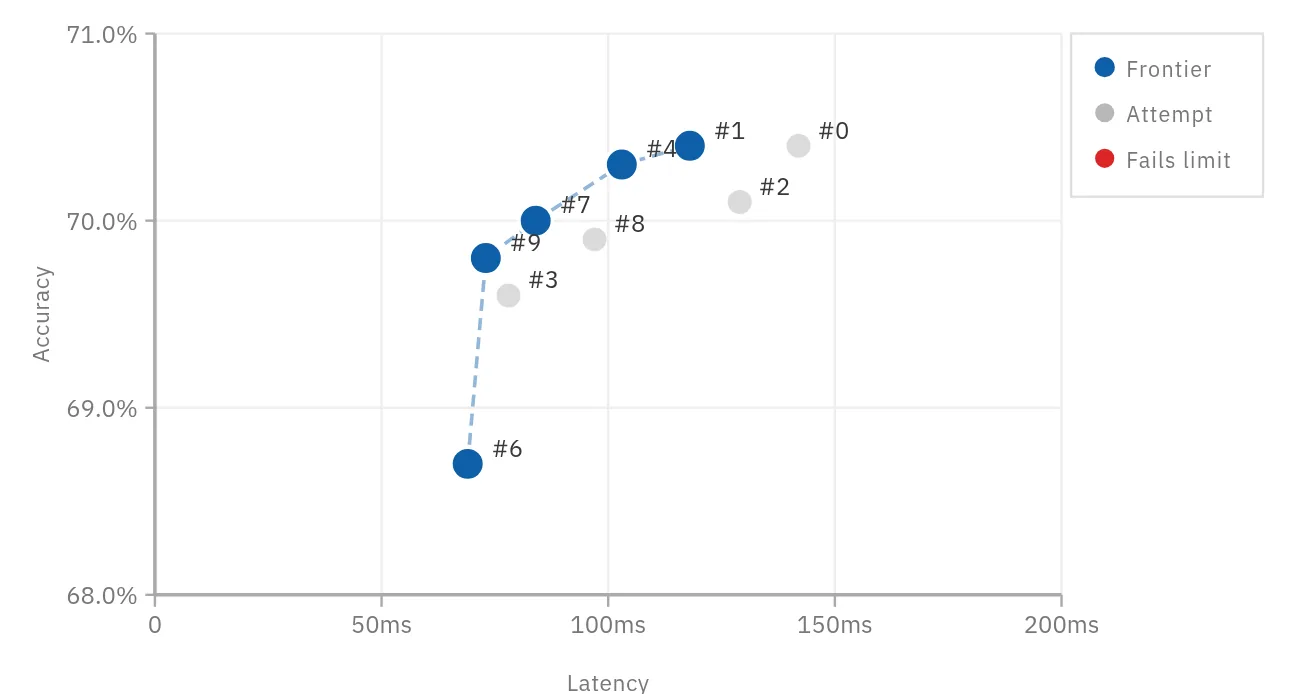
Speed is measured on the real chip. Accuracy is measured on real data.
The result updates the frontier of speed against accuracy.
All four of us: MSc AI at the University of Amsterdam.
We optimize AI models for chips like the NVIDIA Jetson Nano. We are at an early stage, and we are talking to practitioners to learn where model optimization matters most.
Walk us through your current process. We want to learn how you fit models to chips, and what that work costs you.
Contact the team